
Тракийско скално светилище Митровица край село Осеново
Митровица – древната свещена планина
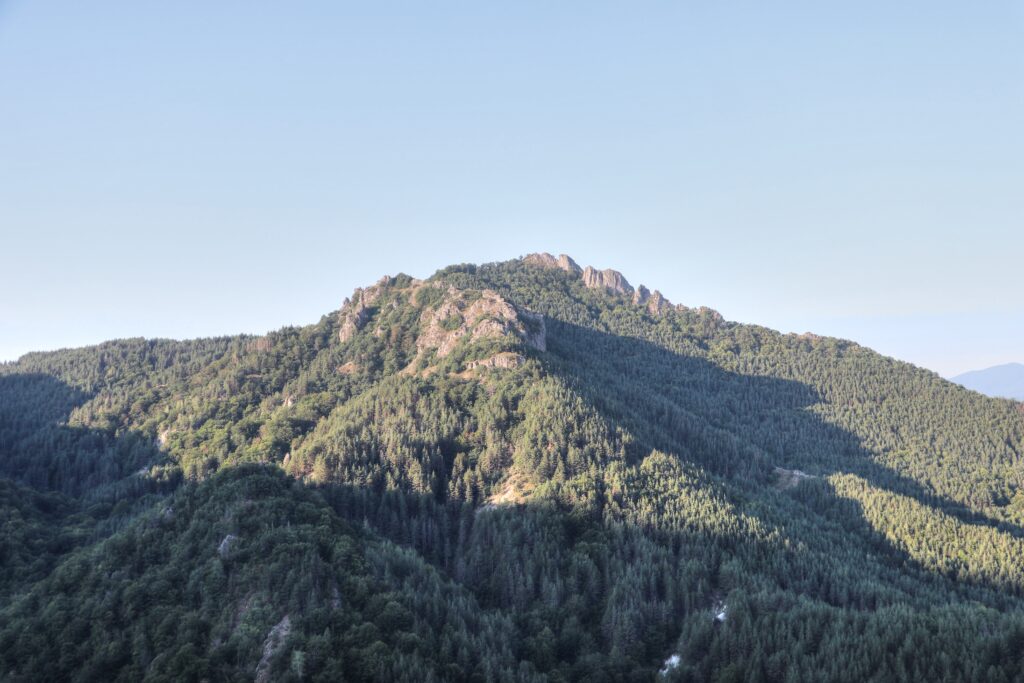
Митровица е връх в Западните Родопи – каменен архив на хилядолетия култова история. Разположено над мястото, където се срещат три реки – Ретиже, Места и Градинишка, светилището се разполага на рид с дължина около 1,5 км, върху който древните траки са оставили седем обособени култови центъра. Върхът, наречен днес „Митровица“, носи християнско име, но в самата му основа пулсира езическото минало.
Скално светилище Митровица се намира в западната част на Дъбрашкия дял на Западните Родопи, на около 29 км южно от Банско и Добринище, на 3 км от центъра на село Осеново, в пешеходна близост до Каменната сватба и е разположен на едноименния връх Митровица (1362 м). Той се издига точно над водослива на три реки – Ретиже, Места и Градинишка. Това прави мястото особено сакрално според вярванията на древните траки. Към този природен код се добавя още един – от скалистия връх Митровица се открива забележителна панорама и се прави визуална връзка към Каменната сватба, циркуса на Попово езеро в Пирин, към съседното от юг значимо тракийско светилище на връх Острец, както и към мегалитното светилище „Кара кая“ или „Черната скала“, също в Западните Родопи. Светилището е доказателство за връзката между скалата и слънцето, между земното и небесното, между материалното и духовното, характерна за мегалитната култура в древна Тракия. Скалата е символ на Великата богиня майка – всемогъща владетелка и покровителка на живота, която самозачева и ражда своя първороден син, който през деня е слънце, а през нощта – огън, и персонифициран като Загрей или Сабазий.
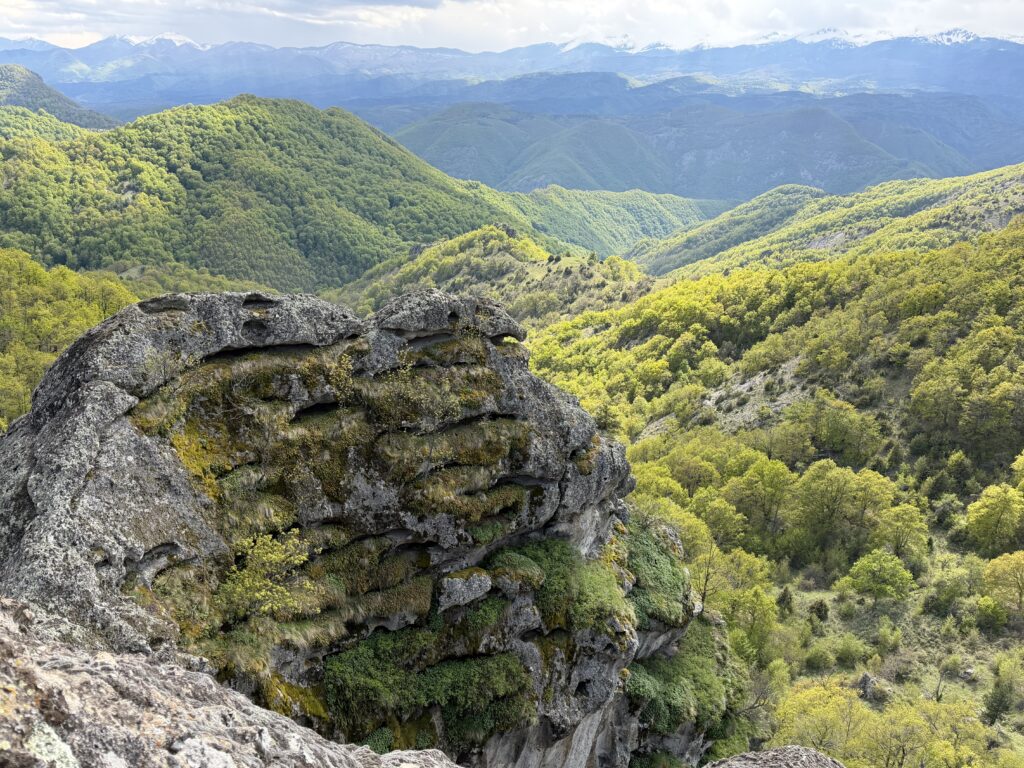
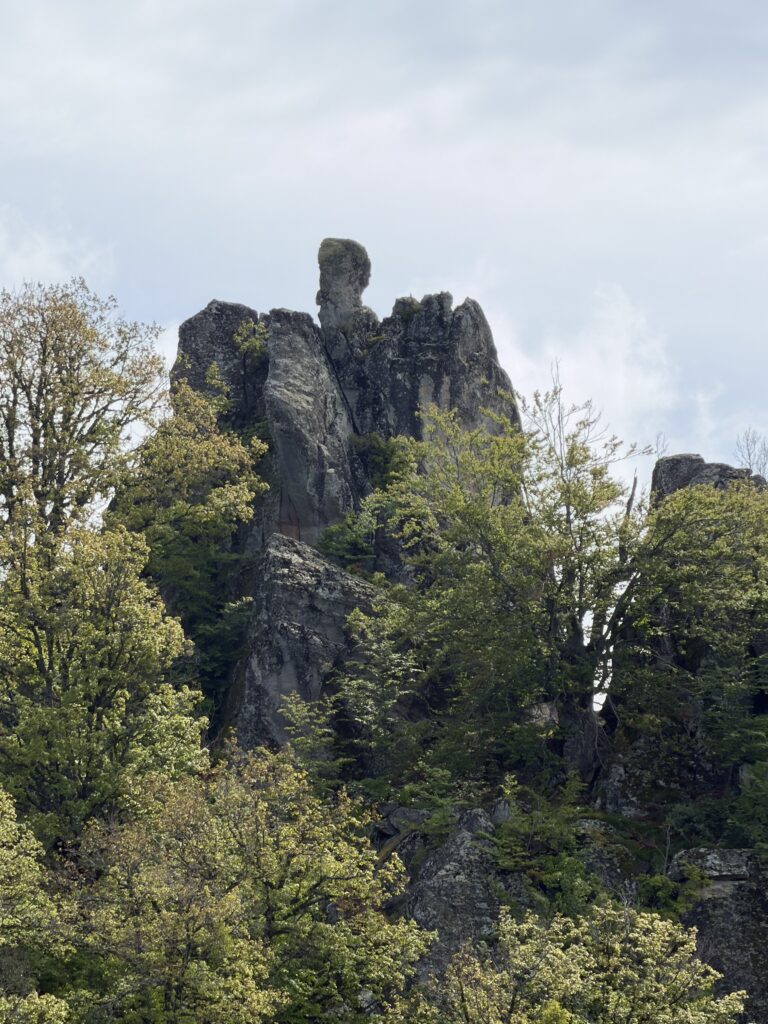
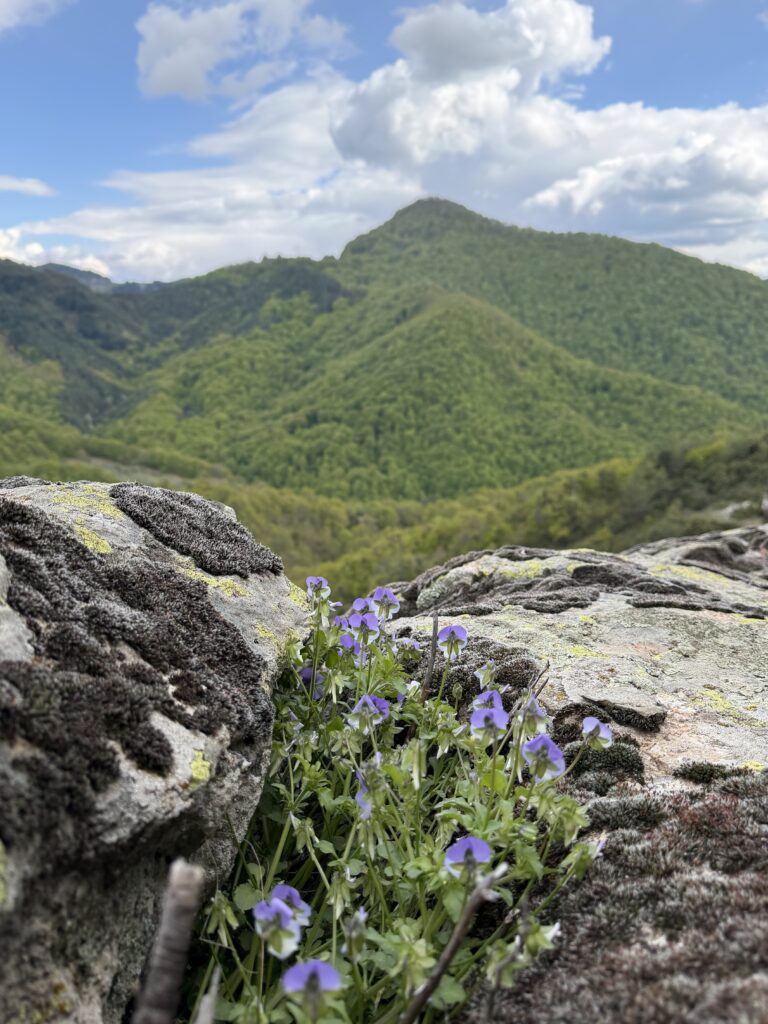
Светилището е едно от най-големите в Югозападна Тракия. Дълго е около 2 км и е широко около 1 км. Митровица притежава седем обособени култови центъра, повечетомаркирани със скални вкопавания или архитектурни градежи. Сред тях най-значими са скалните групи „Железарницата“, „Ветрилницата“ и „Врътен камък“. В местността Падала личи импозантен кръгъл жертвеник с диаметър 25 м, който е бил обсипан с жертвени дарове и фрагментирана тракийска керамика. Открити са данни също за наличието на архитектурна част, която е силно разрушена при иманярска инвазия. Около значителна по размерите си каменна могила, служила за жертвеник през древността, има неголеми архитектурни комплекси. При теренните проучвания, ръководени от проф. Васил Марков, са регистрирани части от суха зидария, както и строителство на хоросанова спойка и фрагменти от римска строителна керамика. Битовата керамика е датирана от предримската, римската и късната Античната епоха (І хил. пр. Хр. – ІV век сл. Хр.).
„Врътен камък“ – скалата на прераждането
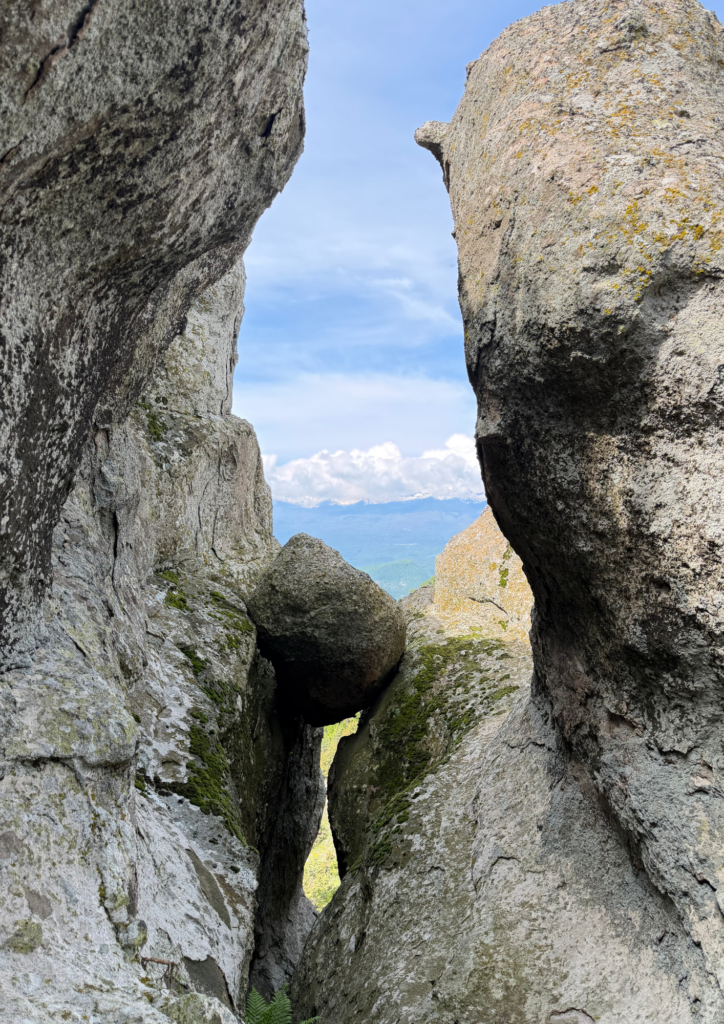
Скалният комплекс „Врътен камък“ представлява монолитна скала, в която се различавапротоме на лъвица, а в „тялото“ й се наблюдава отвор за провиране. Непосредствено до скалната фигура се намира внушителна двойна арка. Още две скални арки, придружени със скално-изсечени жертвеници край тях, се наблюдават в скалния венец, непосредствено на север от „Врътен камък“. Това дава достатъчно основание да бъде считано, че въпросните скални арки символизират лоното на Великата богиня майка. Преминаването през тях пък символизира прераждането – пречистване през смъртта иновото начало. Подобни култови практики по обезсмъртяване са се запазили в голяма част от Западните Родопи. Източната арка на „Врътен камък“ и досега се използва за т.нар. провирания с лечебна цел. Въпреки че съществени части от този обред са загубени по пътя си към нас през отминалите хилядолетия, може да се счита, че култово-магичния обред се изпълнява не само за очистване, но и като акт на магическо засилване на плодородието у жената.
Свещеният връх
Без съмнение най-сакралната част на тракийското светилище се е намирала на най-високата площадка – на самия връх. Там сакралното пространство се развива на три нива, във височина, като се откриват следи от древни култови практики. Ако се съди по дебелия културен пласт на средната култова площадка и фрагментите от битова и строителна керамика, може да се предполага, че през трако-римската епоха, тук е била изградена неголяма ритуална зала, изпълняваща култови функции. Показателен е и фактът, че точно тук се намира и кръстът на християнския храм „Св. Димитър“, наследил древното тракийско светилище, на което и до днес празника на Св. Димитър се почита от местното население. С патронния празник е свързано и името на върха – Митровица. Женският топоним обаче, както и женското животно, което се коли за празника, навежда на мисълта, че християнския светец е наследил древнотракийско светилище, посветено на женско божество. Тази хипотеза се поддържа и от даровете, открити при обследването на култовото място – част от вертикален стан, тежест за вретено и железен сърп – все предмети, използвани в бита от нежния пол. Дарове тук са поставяни, както в предримската, така и в трако-римската епохи, когато в близост до могилата – жертвеник е добавен и архитектурен култов комплекс. Езическото светилище е прекратило съществуването си в края на IV в. сл. Хр. според откритите керамични фрагменти.
И станът, и хурката с вретеното, са атрибути на Великата богиня майка, от която е произлязло всичко – Земя, природа, хора и божества, и се предполага, че това светилище е предназначено за култови практики в почит към нея. Присъствието на сърп обаче предполага също вероятен земеделски култ, свързан с житните растения. Това отново насочва към една конкретна проява на култа към Великата богиня майка в лицето на Великата богиня в Тракия – Деметра, а може би и към нейната дъщеря Коре – Персефона, също свързана с житния култ. Тези факти, заедно с наименованието на върха – Митровица, и с легендата за Каменната сватба на съседния хребет, която също има за свой архетип мистериалната легенда, свързана с Деметра и Персефона, водят към хипотезата, че става въпрос за изключително по мащабите си скално светилище в Западните Родопи, посветено на Деметра. Факт, който предполага практикуването на мистериални култови обреди на това място. Още поне три паметника в границите на Митровица подсказват връзката на светилището с Великата богиня майка.
„Ветрилницата“ – светилището на ветровете
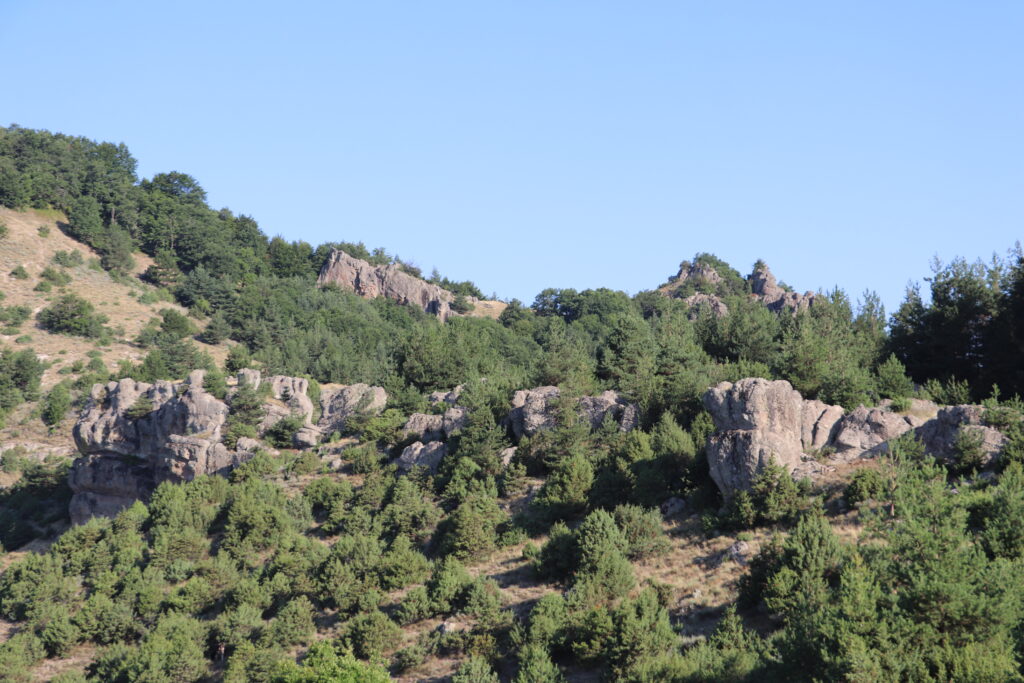
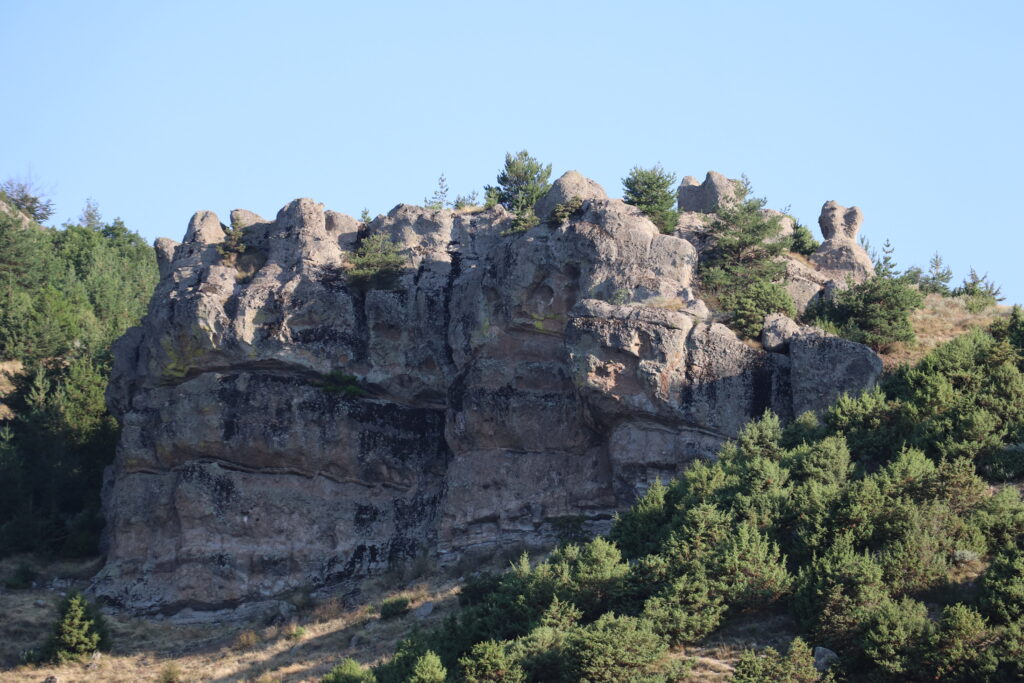
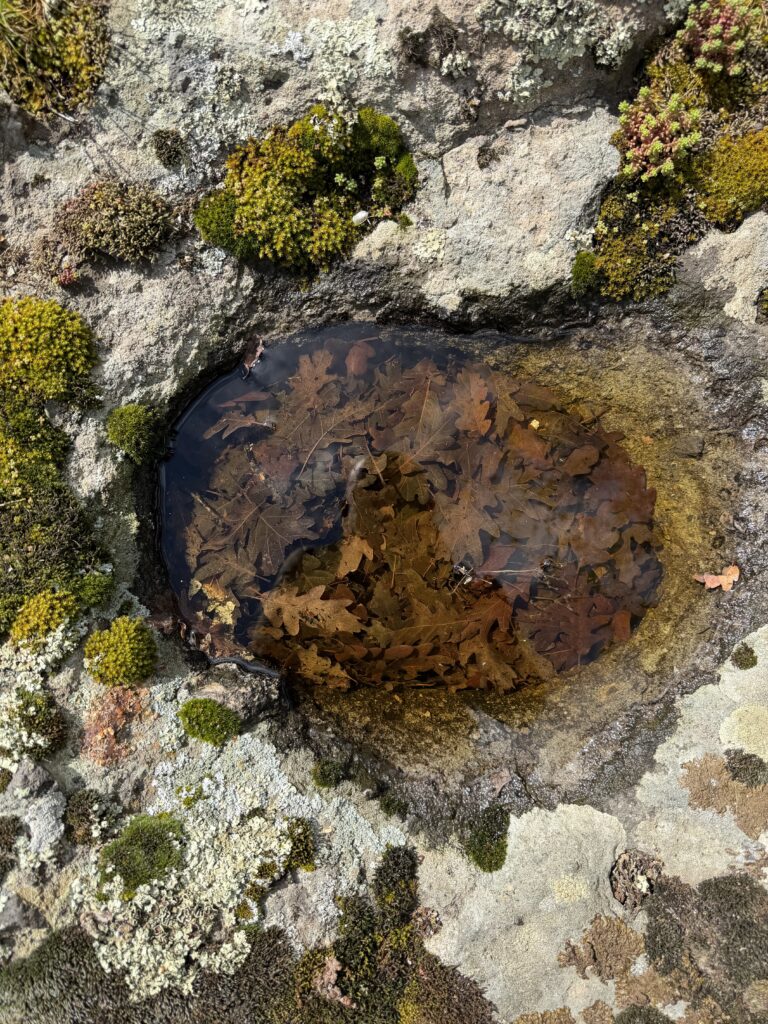
В границите на сакрализираната територия Митровица се издига също скалният масив „Ветрилницата“. Той представлява висока около 20 м скала, която е заравнена на повърхността. Върху ѝ могат да бъдат открити три култови площадки с вкопани в скалата ями-жертвеници, кореспондиращи помежду си с канали. Откритата върху скалата керамика отнася функционирането на този жертвеник към предримската епоха. Топонимът, свързан с жертвеника дава информация за ритуално място, на което древните траки са поднасяли своята почит към мъжкото божество в Тракия – Бога на бурята, познат ни като бога на северния вятър и зимата Борей. В етимологична връзка са думите „буря“ и „боря“.
Живо наследство на тракийската духовност
Така, в рамките на само едно светилище като Митровица, може да се наблюдава различна степен на съхранени следи от тракийското културно наследство по българските земи. В легендата за Каменната сватба все още се откроява митът за Деметра и похитената ѝ от бога на подземния свят Хадес дъщеря Коре – Персефона. На най-високата и най-сакрална част от светилището откриваме черковището – наследник на древнотракийското свещено място, съхранило в християнизиран вид елементи от култа – кръвна жертва за Димитровден. Може да се заключи, че най-устойчива на времето и отминаващите епохи остава топонимията (наименованията на географските обекти). Тя съумява да запази и предаде през вековете връзката между отделните части на това древнотракийско светилище и техните функции, въпреки че митовете на безкнижовните и мистериални траки, и свързаните с тях култови практики, отдавна са загубени за нашето съвремие.
Линк към Google maps с начална точка гр. Банско:
*Информацията за представените културно-исторически обекти е събрана в резултат на теренно проучване в рамките на Експедиция „Западни Родопи“ през 2001 и 2002 г. проведени с участието на „Студентския научно изследователски клуб за древни култури“ към катедра „Културология“ на ЮЗУ „Неофит Рилски“ и публикувана в научното издание „Културно наследство и приемственост“, проф. Васил Марков, УИ „Неофит Рилски“, 2007 г.
Mitrovitsa – The Ancient Sacred Mountain
Rising above the dramatic landscape of the Western Rhodope Mountains, Mount Mitrovitsais far more than a mountain peak—it is a remarkable stone archive preserving thousands of years of sacred history. Perched above the confluence of the Retizhe, Mesta and Gradinishka Rivers, the sanctuary stretches along a ridge approximately 1.5 kilometres long, where the ancient Thracians established seven distinct ceremonial centres. Although the summit now bears the Christian name Mitrovitsa, beneath its surface lies a much older pagan legacy.
The Mitrovitsa Rock Sanctuary occupies the western part of the Dabrash Ridge in the Western Rhodopes, around 29 km south of Bansko and Dobrinishte and only 3 km from the village of Osenovo. Situated on Mount Mitrovitsa (1,362 m), it lies within easy walking distance of the spectacular rock formation known as the Stone Wedding.
The sanctuary’s location was no coincidence. Standing directly above the meeting point of three rivers, it occupied a place considered profoundly sacred by the ancient Thracians. This natural symbolism is reinforced by another remarkable feature: from the summit, visitors enjoy breathtaking panoramic views linking several important prehistoric sacred landscapes. The eye can follow a visual line towards the Stone Wedding, the Popovo Lake Cirque in the Pirin Mountains, the major Thracian sanctuary on Mount Ostrets to the south, and the megalithic sanctuary of Kara Kaya (Black Rock) in the Western Rhodopes.
Together, these monuments formed a sacred landscape where mountain, rock and sky were woven into a single spiritual world.
Mitrovitsa embodies one of the central concepts of Thracian megalithic culture—the connection between rock and sun, earth and heaven, the physical and the divine. In Thracian belief, the rock symbolised the Great Mother Goddess, the supreme creator and guardian of life. She was believed to conceive without a consort and give birth to her first-born son, who appeared as the Sun by day and Fire by night, worshipped under names such as Zagreus and Sabazios.
The sanctuary is among the largest known sacred complexes in south-western Thrace, extending for nearly two kilometres in length and approximately one kilometre in width. Seven separate ritual centres have been identified across the site, most distinguished by rock-cut features or architectural remains. Among the most significant are the rock formations known as Zhelezarnitsata, Vetrilnitsata, and Vraten Kamak.
In the locality known as Padala, archaeologists have identified an impressive circular sacrificial altar measuring approximately 25 metres in diameter. Excavations revealed large quantities of votive offerings together with fragments of Thracian pottery. Evidence also points to the existence of a substantial architectural complex, although much of it has unfortunately been destroyed by illegal treasure hunting.
Around a large stone mound, which once served as an ancient altar, researchers have documented the remains of smaller ritual buildings. Archaeological surveys led by Professor Vasil Markov recorded sections of dry-stone walls, masonry bonded with mortar and fragments of Roman building ceramics. Everyday pottery recovered from the site dates from the pre-Roman, Roman and Late Antique periods, spanning roughly the first millennium BC to the fourth century AD.
Vraten Kamak – The Rock of Rebirth
One of the sanctuary’s most remarkable monuments is the rock formation known as Vraten Kamak („The Turning Stone“). This imposing monolithic outcrop bears the striking profile of a lioness carved by nature and enhanced by human perception. Within the „body“ of the rock is a narrow opening through which visitors can pass. Beside it rises a magnificent double rock arch, while two additional arches, accompanied by rock-cut sacrificial altars, can be found immediately to the north along the rocky ridge.
These natural formations are widely believed to have symbolised the womb of the Great Mother Goddess. Passing through the openings represented a ritual journey of symbolic death and rebirth—a spiritual purification through which participants emerged renewed. Similar rites associated with rebirth and immortality were once practised throughout much of the Western Rhodope Mountains.
Even today, the eastern arch of Vraten Kamak continues to be used in local folk tradition as a place for ritual passage believed to bring healing. Although much of the original Thracian ceremony has been lost over the centuries, the surviving custom is thought to preserve elements of an ancient sacred ritual performed not only for purification but also to promote fertility and the blessing of new life.
The Sacred Summit
The holiest part of the Thracian sanctuary undoubtedly occupied the highest terrace at thevery summit of Mount Mitrovitsa. Here the sacred space unfolds across three natural levels, where archaeological evidence reveals successive stages of ritual activity.
The substantial cultural layer discovered on the central terrace, together with fragments ofdomestic and architectural ceramics, suggests that during the Thraco-Roman period a smallceremonial building once stood here, serving important religious functions.
Significantly, this very spot is now marked by the cross of the Christian chapel dedicated toSt Demetrius, which inherited the sanctity of the ancient Thracian sanctuary. To this day, local people gather here to celebrate St Demetrius‘ Day, continuing a tradition that hasendured for centuries. The mountain itself owes its modern name—Mitrovitsa—to thisChristian dedication.
Yet several intriguing details point towards a much older origin. The feminine form of theplace name, together with the traditional sacrifice of a female animal during the feast, suggests that the Christian shrine may have replaced an earlier sanctuary devoted to a femaledeity.
Archaeological discoveries strongly support this interpretation. Offerings unearthed at the siteinclude part of a vertical loom, a spindle whorl and an iron sickle—all objects closelyassociated with women’s daily lives in antiquity. Such offerings were deposited throughoutboth the pre-Roman and Thraco-Roman periods, when an architectural cult complex wasadded near the great stone altar.
According to the archaeological evidence, the pagan sanctuary ceased to function towards theend of the 4th century AD, marking the gradual transition from ancient Thracian religion to Christianity.
A Sanctuary of the Great Mother Goddess
The holiest part of the Thracian sanctuary undoubtedly occupied the highest terrace at the very summit of Mount Mitrovitsa. Here the sacred space unfolds across three natural levels, where archaeological evidence reveals successive stages of ritual activity.
The substantial cultural layer discovered on the central terrace, together with fragments of domestic and architectural ceramics, suggests that during the Thraco-Roman period a small ceremonial building once stood here, serving important religious functions.
Significantly, this very spot is now marked by the cross of the Christian chapel dedicated to St Demetrius, which inherited the sanctity of the ancient Thracian sanctuary. To this day, local people gather here to celebrate St Demetrius’ Day, continuing a tradition that has endured for centuries. The mountain itself owes its modern name—Mitrovitsa—to this Christian dedication.
Yet several intriguing details point towards a much older origin. The feminine form of the place name, together with the traditional sacrifice of a female animal during the feast, suggests that the Christian shrine may have replaced an earlier sanctuary devoted to a female deity.
Archaeological discoveries strongly support this interpretation. Offerings unearthed at the site include part of a vertical loom, a spindle whorl and an iron sickle—all objects closely associated with women’s daily lives in antiquity. Such offerings were deposited throughout both the pre-Roman and Thraco-Roman periods, when an architectural cult complex was added near the great stone altar.
According to the archaeological evidence, the pagan sanctuary ceased to function towards the end of the 4th century AD, marking the gradual transition from ancient Thracian religion to Christianity.
Vetrilnitsata – The Sanctuary of the Winds
Within the sacred landscape of Mitrovitsa rises another remarkable monument known asVetrilnitsata. This impressive rock mass, standing approximately 20 metres high, has a naturally levelled summit on which three ritual platforms have been identified. Each containsrock-cut offering pits connected by carefully carved channels, forming an integratedceremonial complex.
Pottery fragments discovered on the summit date the sanctuary to the pre-Roman period, confirming its importance long before Roman influence reached the region.
The name Vetrilnitsata, closely associated with the wind, offers an important clue to itsoriginal purpose. It is believed to have been a sacred place where the ancient Thracianshonoured the Storm God, revered as the deity of the northern wind and winter, known inGreek tradition as Boreas. Even the linguistic connection between the Bulgarian words forstorm (burya) and to battle or to struggle (borya) reflects echoes of this ancient belief.
A Living Landscape of Thracian Heritage
Few places preserve the many layers of Thracian spiritual culture as vividly as Mitrovitsa. Within a single sacred landscape, visitors encounter archaeological remains, enduring place names, local legends and living traditions that together reveal remarkable continuity across more than two millennia.
The legend of the nearby Stone Wedding still echoes the ancient myth of Demeter and her daughter Persephone, abducted by Hades, lord of the Underworld. At the sanctuary’s highest and most sacred point stands the Christian chapel, heir to the ancient Thracian holy place, where elements of earlier ritual practice survive in Christianised form. Even today, the traditional animal sacrifice performed on St Demetrius’ Day preserves traces of customs whose origins reach deep into antiquity.
Perhaps the most enduring witnesses to this remarkable continuity are the place names themselves. Long after the Thracians’ unwritten myths and mystery rites had faded from memory, the ancient toponyms continued to preserve the identity and function of different parts of the sanctuary, silently carrying fragments of the sacred landscape through the centuries.
Today, Mitrovitsa stands not only as an outstanding archaeological monument but also as a place where nature, mythology and history merge into one extraordinary cultural landscape. Walking its ancient paths offers visitors a rare opportunity to experience one of the Western Rhodopes’ most significant Thracian sanctuaries while enjoying spectacular views across the Rhodope, Pirin and Rila Mountains.
Visitor Information
• Trail marking: White–Blue–White horizontal trail markings.
• Walking time: A short and easy hike suitable for families and visitors of all ages; idealfor a half-day excursion.
• Elevation gain: Approximately 200–250 metres from the access road to the summit.
• Panorama: The summit rewards visitors with magnificent 360-degree views of thePirin Mountains, the peaks of Rila, and the surrounding Rhodope landscape.
• Nearby attraction: The route can easily be combined with a visit to the uniquemountain village of Ribnovo, just 4.5 km away. The village is renowned for itscolourful traditional costumes and the spectacular Gelina wedding ritual, recognisedas part of UNESCO’s Intangible Cultural Heritage.
*The information about the presented cultural and historical sites was collected as a result of field research within the “Western Rhodopes Expedition” in 2001 and 2002, conducted with the participation of the “Student Scientific Research Club for Ancient Cultures” at the Department of Culturology, South-West University “Neofit Rilski,” and published in the scholarly edition “Cultural Heritage and Continuity,” Prof. Vasil Markov, SWU “Neofit Rilski,” 2007.